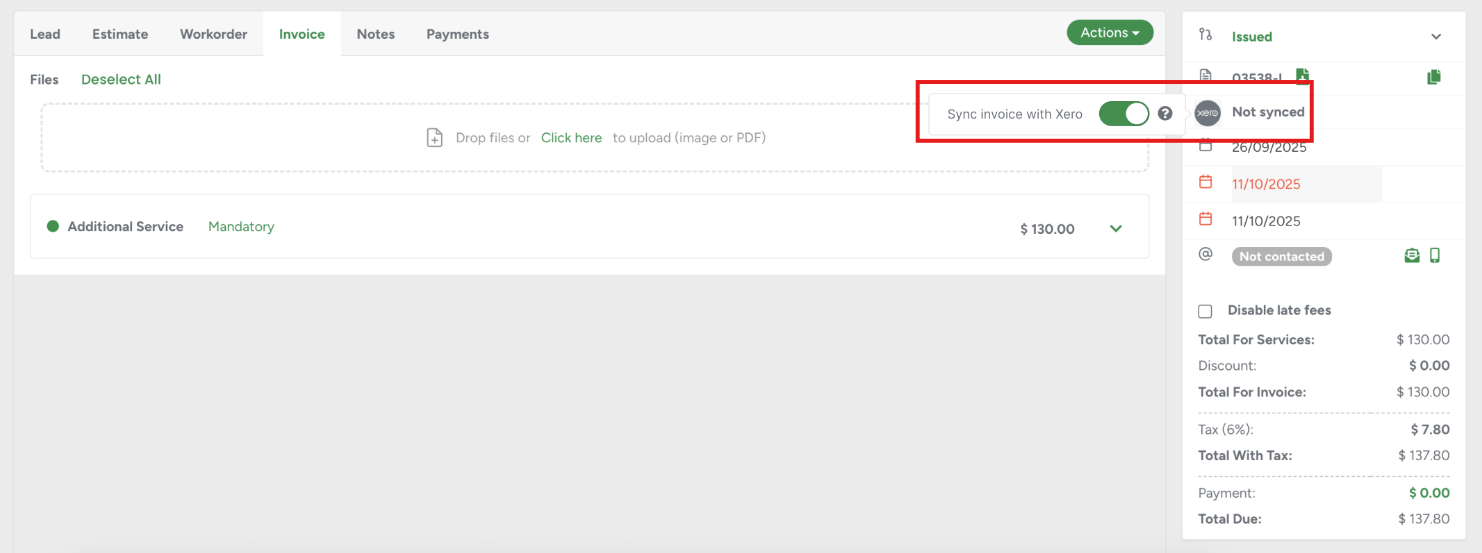
Creating an Invoice and Adding Payments

Learn everything you need to know about managing invoices in the system — from automatic invoice creation and sending options to adding payments, handling partial invoices, applying or removing interest, and collecting client feedback

Invoice page

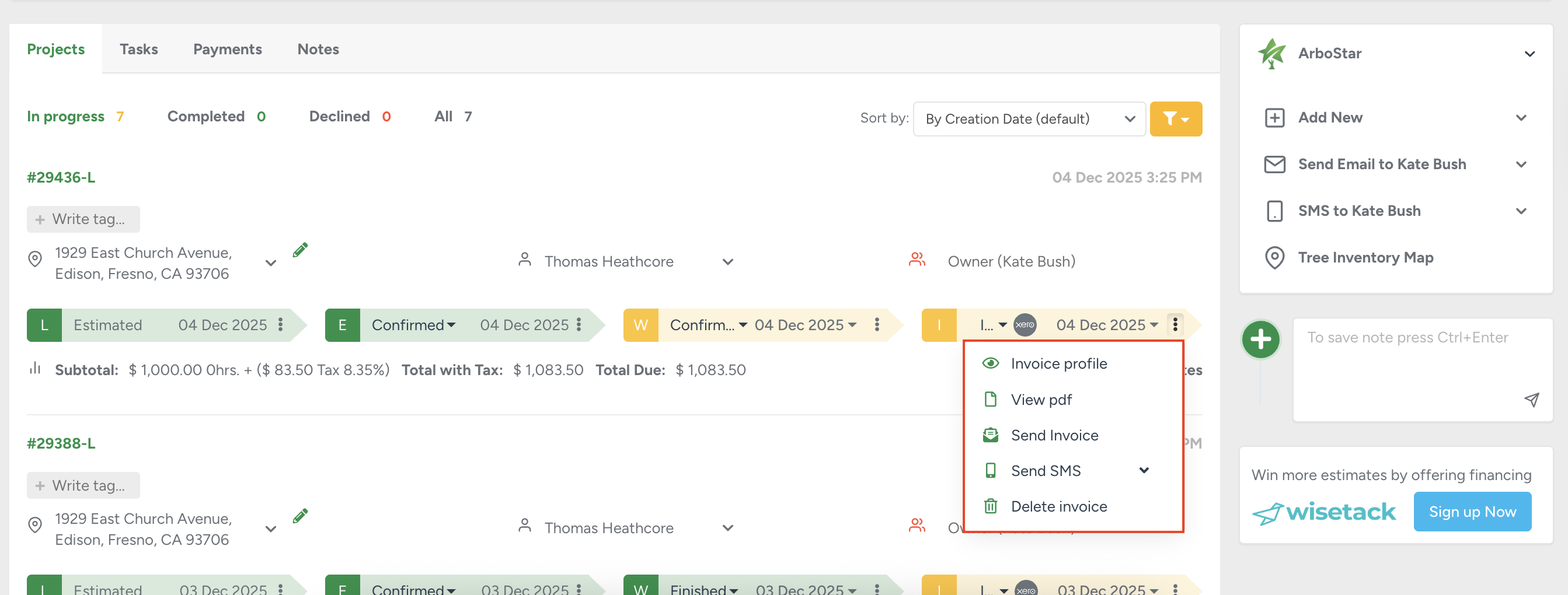
  • The invoice is generated automatically when the status of the corresponding Workorder is changed to 'completed'. To access the invoice page, navigate to the client's profile and click on the Invoice profile.
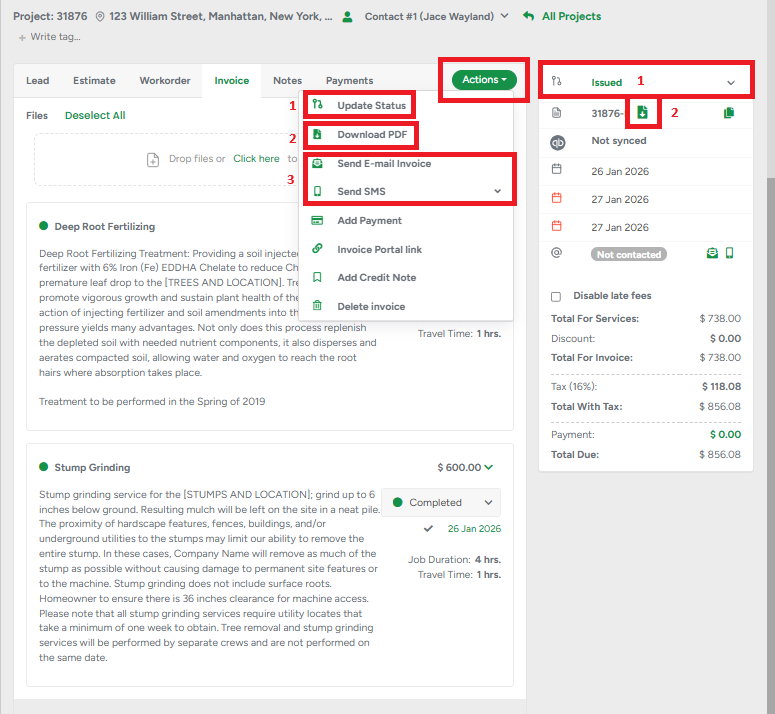
  • On the Invoice page, you can change its status, share the invoice link with a client, add payments and much more. All those functions can be found under the dedicated Action button. Options such as
  • Update status;
  • Download PDF;
  • Send Email or SMS is carried out to the quick access panel.

  • To send the invoice to the client via email or SMS, please choose the corresponding option from the Action menu. Be advised that you can edit the email message to meet your requirements.
If the SMS service is activated for the company, you can also send SMS to the clients that the invoice has been sent via email.
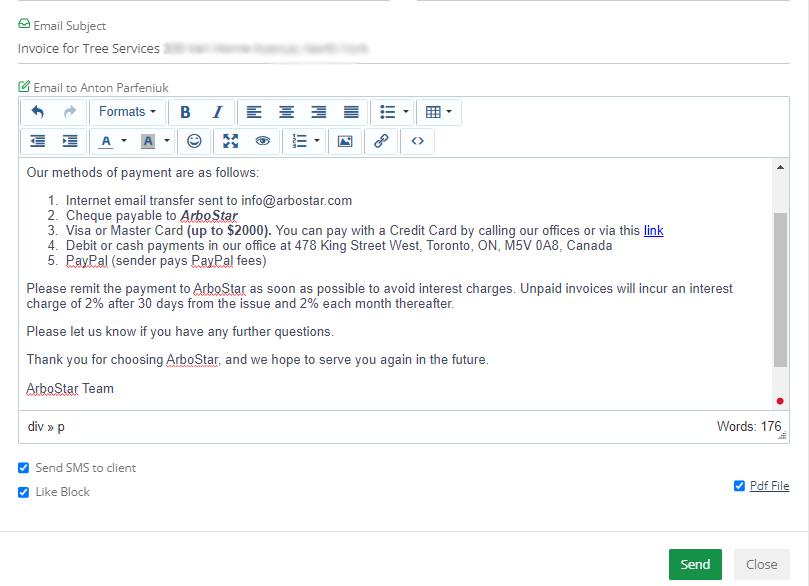
Edit the SMS/Email content

Please note, you'll be presented with the option to automatically send the invoice PDF to the client right after confirming to change the WO status to Completed.
Clients can make payments and confirm via the Portal link in the email. Click here to learn more.

Partial invoices

  • Partial Invoices can be issued for one or several completed services from Workorder. 
  • To create a partial invoice, you can either change the status of services to Completed manually and then click on the Create invoice button, or you can mark the required services and click on the Create Invoice.
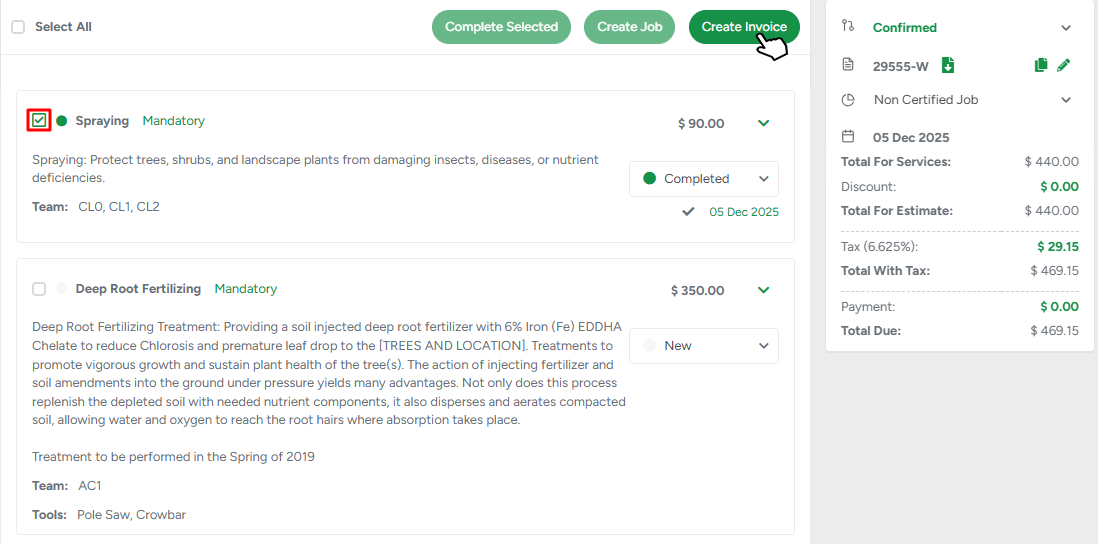
In case services weren't marked as completed, the system will propose to update their statuses automatically.
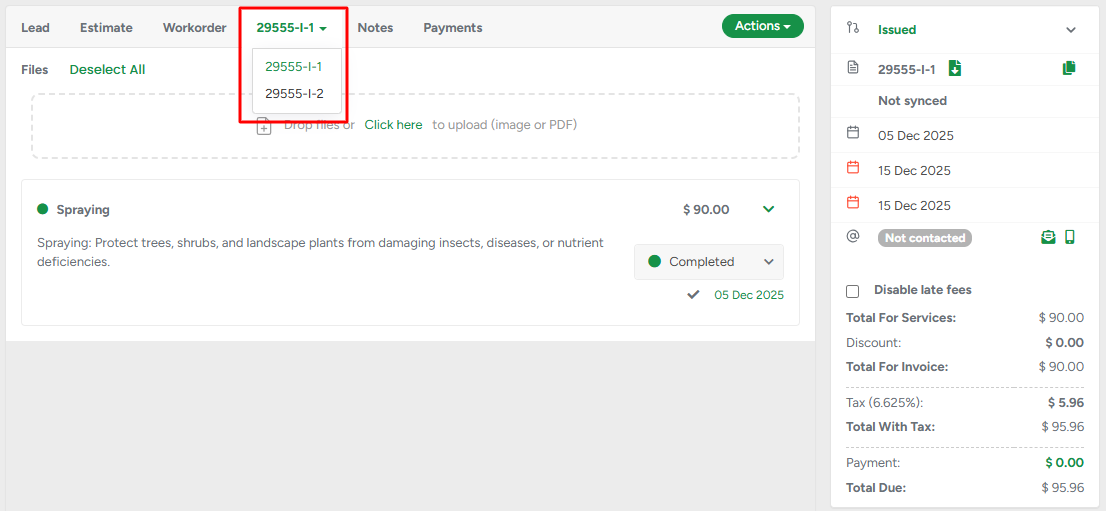
  • In case the project has multiple partial invoices, each invoice is going to be subsequently enumerated. Once both (or more) partial invoices are generated, you’ll be able to switch between them from the drop-down menu.
Adding a payment

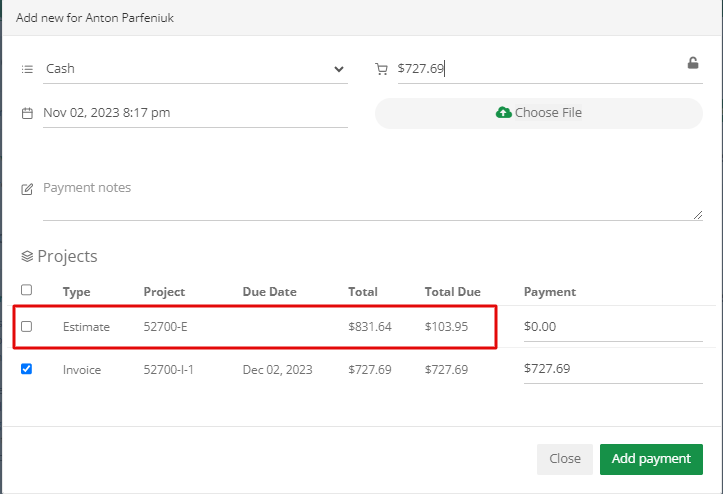
  • To add a payment, click on the ActionsAdd payment button. In the pop-up window, fill out the payment information and click Add Payment.
Adding a payment

Please note that you can add both full and partial payments. However, when adding a payment, the total due amount of the estimate is automatically filled out. Thus, the sum should be added manually for partial payments.
You can also add a payment from the client's profile by clicking on the  Add Payment button.
  • If you want to send the Thank you for the Payment email manually, you can easily do it from the client's profile page.
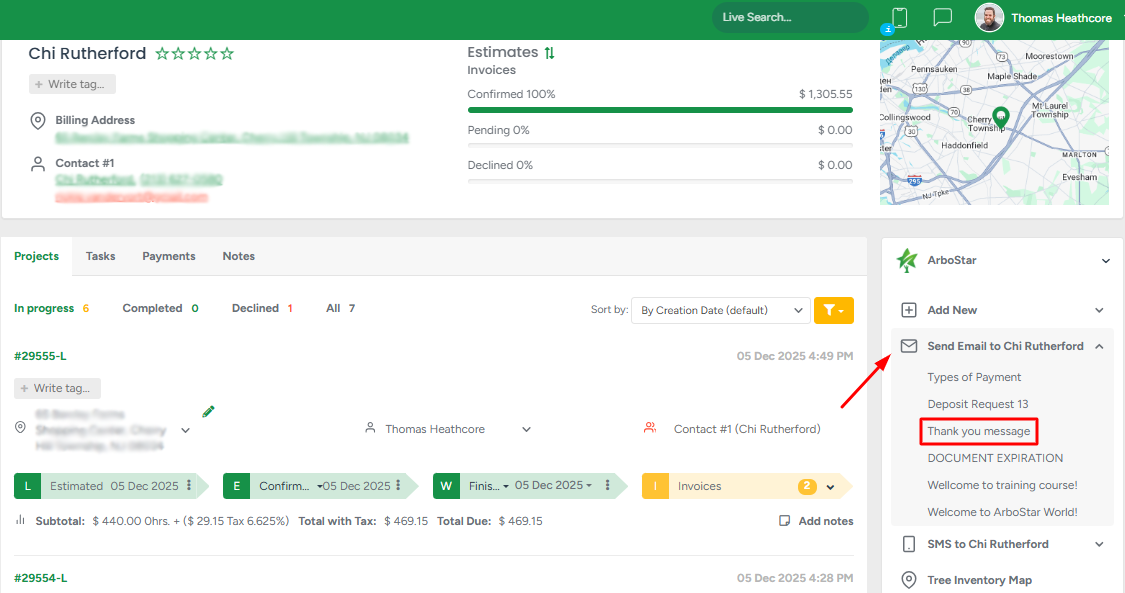
When an invoice is fully paid, an automated “Thank you for the Payment” email appears that you can send to the client.

Add Credit Note to an Invoice

A new option - Add Credit Note - is now available directly from the Invoice Profile. This update provides greater flexibility when correcting invoice amounts, issuing refunds, or adjusting previously invoiced work.

You can find the new action in the Actions dropdown on the invoice page. The option appears immediately after Invoice Portal Link and before Delete Invoice, maintaining consistent navigation within the invoice tools.

When the Action Is Available

The Add Credit Note option is available for all invoice statuses except Paid.

  • If the invoice is fully paid, the action is hidden (or shown as disabled, depending on company settings).

  • For all other invoices, the option appears normally.

How It Works

When you click Add Credit Note, the system opens the Credit Note modal, where you can review and confirm the amount to be credited.

The modal automatically displays:

  • The Invoice Number

  • Details pulled from the current invoice

  • Adjustable input fields for specifying the credit amount and reason

This ensures that users have full visibility and control before issuing the credit.

Permissions

The action is accessible only to users who have permission to edit invoices.
If a user does not have the required permission, the action will not be displayed in the menu.

Credit Note Modal

The Credit Note modal is used to create one or multiple credit notes for a specific invoice. It provides a structured way to adjust invoice totals while ensuring all financial changes remain transparent, consistent, and logged.

The modal can be opened in two ways:

  • By selecting Add Credit Note from the Actions menu on the Invoice Profile.

  • By clicking the green Credit Notes total displayed in the invoice sidebar (available once at least one credit note has already been added).

The modal header displays the title: Add Credit Note for [Invoice Number], where the invoice number dynamically updates based on the invoice being adjusted.

Credit Note Rows

Each credit note is displayed as an individual row with clearly defined fields:

Credit Note #

  • Assigned automatically based on the project number.

  • Format: [Project No]-CN, [Project No]-CN-1, [Project No]-CN-2, etc.

  • The field is read-only and cannot be edited.

Creation Date

  • Required field.

  • Defaults to today’s date.

  • Users can manually change the date within the allowed range.:

Please advise that the credit note date cannot be earlier than the invoice creation date and cannot be set to a future date.

Description

  • Optional text field for internal notes or clarifications.

Amount

  • Editable input representing the net amount (without tax).

  • When this field is filled, the Tax and Amount with Tax values are calculated automatically.

Tax

  • Read-only field.

  • Calculated automatically based on the tax rate of the associated invoice.

Amount with Tax

  • Editable input representing the gross amount.

  • If this field is filled instead of Amount, the system recalculates the Amount and Tax fields automatically.

Calculation Logic

  • Users may enter either Amount or Amount with Tax.

  • When one field is populated, the other values are calculated automatically using the tax rate from the original invoice.

  • Credit notes with a total value of $0 are allowed.

Summary Bar

Below all credit note rows, the system displays a summary section with:

  • Total Amount – sum of all net values

  • Total Tax – sum of all calculated tax values

  • Total Amount with Tax – full gross total across all rows

This section updates automatically as values change.

Once a credit note is saved:

  • The row becomes read-only inside the modal.

  • Previously saved credit notes cannot be edited.

  • To make modifications, the user must delete the existing entry and create a new one.

Invoice Sidebar Calculations 

When credit notes are added or updated, the invoice sidebar recalculates all financial totals to ensure accuracy and transparency.

Credit Notes Line

A new Credit Notes row is displayed in the right-hand sidebar:

  • Positioned above the Payments line.

  • Shows the total value of all credit notes applied to the invoice.

  • Displayed as a negative amount (e.g., –$250.00).

  • The value updates automatically as credit notes are created or deleted.

Total Due Recalculation

The system applies the following formula to determine the updated balance:

Total Due = Invoice Total – Credit Notes – Payments

Recalculation occurs automatically after:

  • Adding a new credit note

  • Removing a credit note

Real-Time Updates

Once credit notes are saved in the modal, the sidebar totals refresh immediately.
If more credit notes are added later, both the Credit Notes line and Total Due update dynamically.

Invoice PDF Updates

Credit notes are now included in the invoice PDF to ensure consistent and transparent financial reporting.

Credit Notes Line

A new Credit Notes line appears in the totals section of the invoice PDF:

  • Positioned above the Payments line and above Total Due

  • Displays the total value of all credit notes linked to the invoice

  • Shown as a negative amount (e.g., –$100.00)

  • Follows the same number and currency formatting used throughout the invoice

Negative values are always displayed with a leading sign.

Total Due Calculation

The Total Due on the PDF reflects credit notes correctly:

Total Due = Total for Invoice – Credit Notes

The value must always match the Total Due displayed in the invoice sidebar.

Affected Modules

Credit notes are fully integrated across all financial modules to ensure consistent calculations and reporting.

Invoices List

  • Total Due updates automatically whenever credit notes are applied.

  • When clicking the Total column to view the tooltip:

    • A Credit Notes line appears above Payment (if any credit notes exist).

    • The credit note value is displayed as a negative amount.

    • Total Due is recalculated in real time.

  • CSV Export now includes:

    • A new Credit Notes column showing the total credit notes per invoice.

    • An updated Total Due column reflecting credit-note adjustments.

Business Intelligence — Invoices StatisticsAll metrics based on Total Due automatically include credit note adjustments without additional configuration.

Business Intelligence — Sales

  • All totals and sales metrics are calculated after credit notes are applied.

  • Exported datasets include the updated Total Due, with no separate credit note column required.

Consistency Rule

Across all modules, Total Due is recalculated dynamically whenever a credit note is created or deleted, ensuring alignment between the invoice profile, reports, exports, and dashboards.

Synchronisation with Xero & QuickBooks

Credit notes created in the system are automatically synchronised with the company’s connected accounting platform (Xero or QuickBooks). Each credit note is transferred as an individual record linked to its original invoice.

Data Included in Sync

Each synchronised credit note contains:

  • Invoice reference

  • Credit Note number

  • Creation date

  • Credit Note amount

  • Description (if provided in the modal)

Accounting Behavior

  • The credit note reduces the invoice balance in Xero/QuickBooks by the corresponding amount.

  • The invoice status in the accounting platform is updated based on the new Total Due.

  • All credit notes are displayed in the synchronisation logs with detailed success or failure statuses.

Error Handling

If synchronization fails, the system logs the event in the integration error list with a clear explanation (e.g., invalid date, missing invoice reference, duplicate identifier). Users can review the error details and retry if needed.

Integration Requirements

Credit notes are synchronised only if Xero or QuickBooks integration is active for the company and only for credit notes created after the integration has been enabled.

Manual Interest Removal 

In case the client didn't pay in time, the status of the estimate will be changed to Overdue automatically, and the interest will be applied to the project. Overdue interest can be manually removed from invoices without contacting a support representative. The flow with built-in safeguards prevents misuse and logs all changes for transparency.
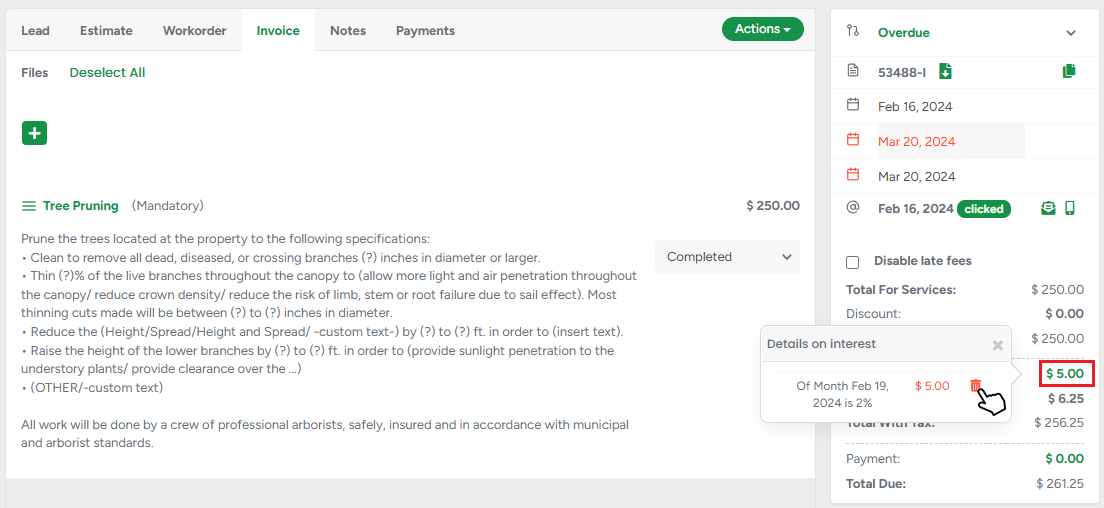
Interest settings in Company Management support different rates and conditions based on client type (e.g., residential, municipal, commercial). Admins can enable or disable interest applications per client type, with added validation to prevent 0% or 0-day configurations.

Feedback on Invoice portal page

  • Your clients can easily leave you feedback on the Invoice Portal page.

When sending an invoice to the client, clients can click on the updated Like and Dislike buttons that will forward them to the respective portal page.

Feedback on invoice

  • On the feedback page, the client has an option to change the Like to Dislike and leave a comment.
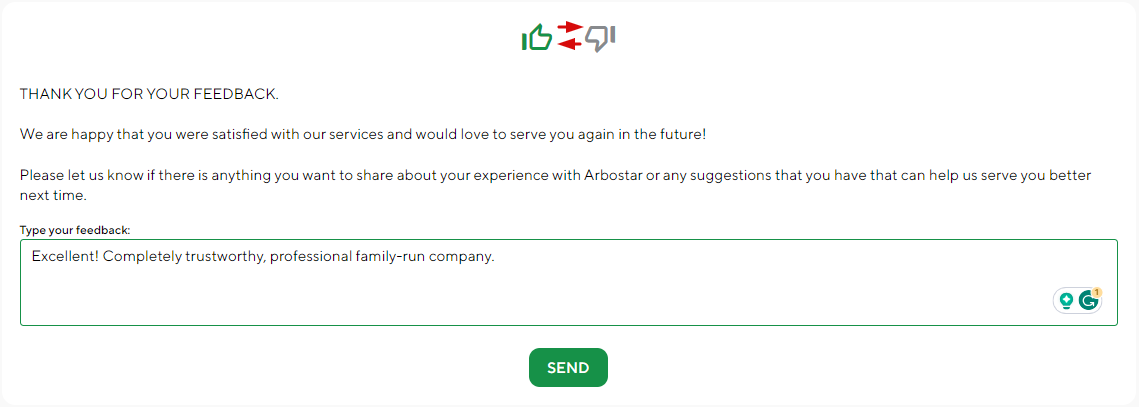
Change Like to Dislike

  • To edit the message the clients see on the Feedback page, navigate to the BrandsReview SettingsLike message or Dislike message section.
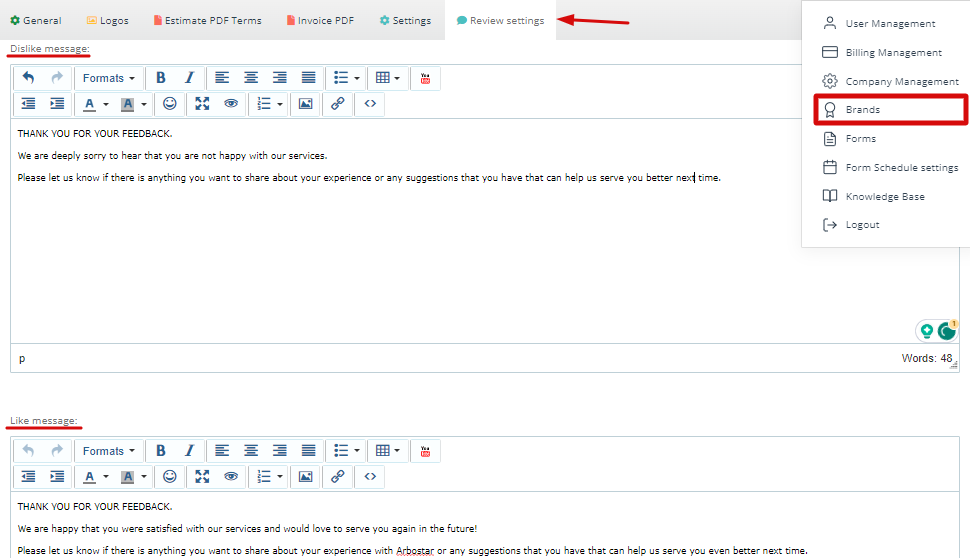
Review settings

Some of our credit card transaction changes give you better control over how and when credit card fees are applied:

  • Minimum Amount Threshold: Transaction fees apply only to payments over a configurable amount (e.g. $5,000). Payments below this threshold will not include a fee for your client.

  • Debit Card Exclusion: You can ask our support team to disable transaction fees for debit cards while keeping them enabled for credit cards.

  • Our system uses a secure BIN check to automatically detect debit vs. credit cards during payment.